
The UK’s role in international development was, for many years, one of stable leadership. The New Labour Government created the Department for International Development in 1997 and helped to build much of the modern multilateral system including Gavi, the Vaccine Alliance and the Global Fund to fight AIDS, Tuberculosis and Malaria. By 2010 there was cross party consensus on the importance of international development to the UK. The 0.7% of GNI spending commitment was enshrined in legislation and then PM David Cameron made eradicating polio a personal mission.
Stability is no longer the watchword of brand Britain. As Andy Burnham becomes the UK’s 7th Prime Minister in 10 years, little to nothing is known about his global priorities and ambitions. The extreme cuts to ODA spending – now only 0.3% of GNI – have had devastating impacts and cost lives. They have also weakened the UK’s influence but are unlikely to be reversed in the short term. So what can our new PM do to restore our reputation in international development?
- make the case for international development
Keir Starmer was criticised for focusing too much on foreign affairs and not delivering on domestic policy. Andy Burnham has already stated that he will be applying the Makerfield Test to any proposed government policy. If it does not benefit the people of Makerfield and communities like it across the UK then it cannot proceed. At first glance this could seem like bad news for international development. How can ending tuberculosis, saving the lives of children in low and middle income countries or ensuring their access to good quality education, possibly help the people of Makerfield?
In reality all of these things benefit the UK and the people of Makerfield directly.
As Dr Beccy Cooper MP argued in her recent blog for Results UK:
“The argument that we should be making is simple and honest: strong health systems abroad make Britain safer and more prosperous at home. This is not charity. It is self-interest”.
Surveys by the Office for National Statistics consistently finds that the NHS is considered to be the second most important issue facing the UK. As we all learnt during the COVID 19 pandemic, diseases don’t respect borders. Studies have shown that preventing pandemics costs a fraction of what countries spend in controlling them. Investments in disease surveillance, primary care capacity, and vaccinations act as a frontline defense against infectious disease threats and prevent major costs, along with reducing the likelihood of an outbreak becoming a global crisis. Investing in global health helps save the UK money that can be spent in communities like Makerfield.
As well as health benefits, donor countries like the UK also enjoy economic and trade benefits from investing in health ODA. A study by Impact Global Health found that every dollar invested in neglected disease research and development (R&D) generates an estimated $405 in social and health returns. When the global population is healthy, stable, and well integrated into the global market, it improves labor productivity, fosters supply-chain resilience, and creates economic partnerships that boost trade relationships and investment opportunities for donor countries. Economic growth is a priority for the UK and international development spending is one way to achieve this.
ODA investments in global health R&D not only help to fight neglected diseases and improve health outcomes, they also create jobs and strengthen innovation ecosystems. Impact Global Health estimated that the UK government’s R&D investments of 424 million pounds in neglected diseases can create 2.7 billion pounds in long-term returns including 54 patents, 5,000 publications, and 3,945 additional UK-based jobs. There is no intrinsic reason that new jobs in R&D should be based in London and the South East and they could be part of a regional jobs agenda.
In addition to these arguments is of course the fact that saving lives and ending poverty are the right things to do. It speaks to the values that we, the British people, like to claim as part of our shared identity; fairness, solidarity and global citizenship. Nearly half (48%) of the British public are concerned – or very concerned – about levels of poverty in other countries. Global health security and economic benefits are important but so is making the positive case for doing good in the world. International development is not and should not just be transactional. The danger of something like the Makerfield test is that the UK could become very insular and isolated. Making the case for international development can help mitigate that risk.
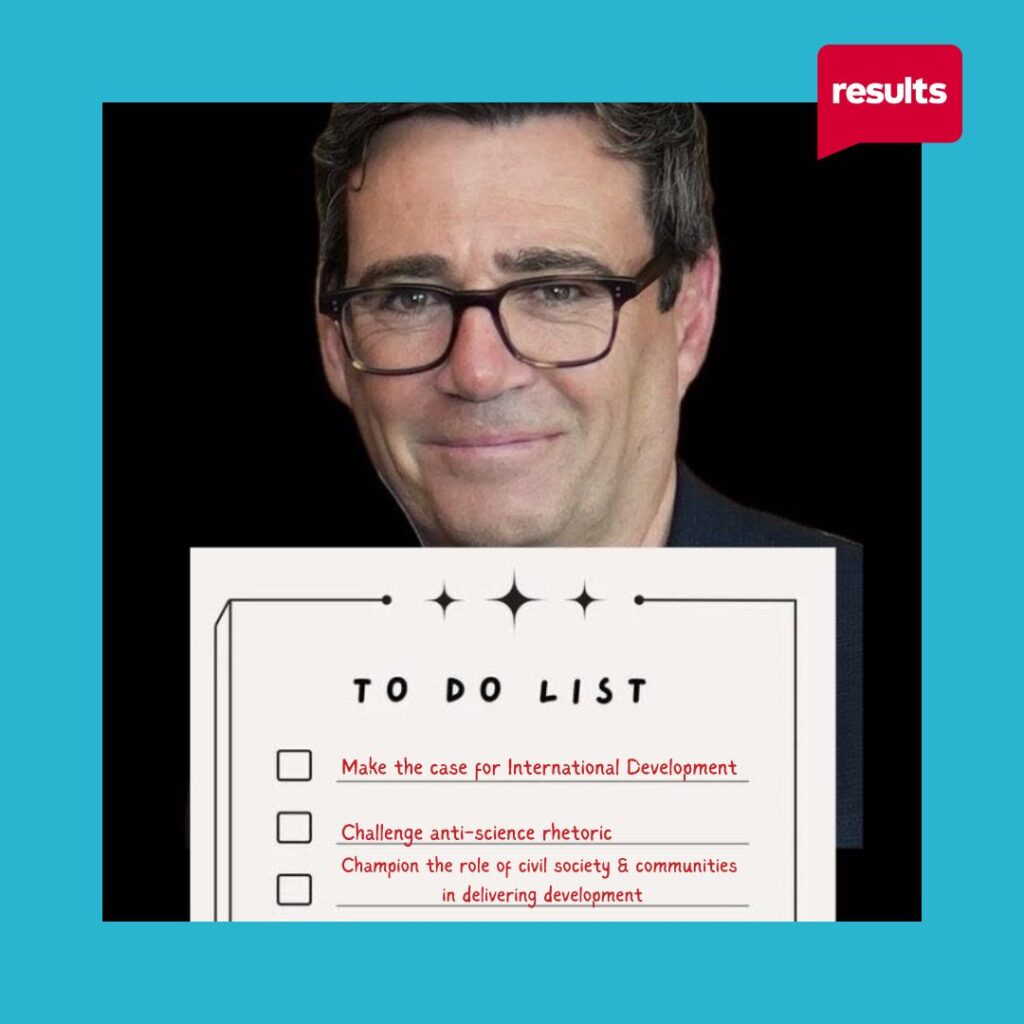
- challenge anti-science rhetoric
Populist politicians have long been challenging the scientific consensus on climate change and this has now extended to global health – particularly immunisation.
Robert F. Kennedy Jr., the United States Secretary of Health and Human Services, has been promoting anti-vaccination messages – including the lie that they cause autism for many years. In office, he has dismissed members of a profile advisory committee on immunisation replacing them with critics of mainstream vaccine science. He also regularly cites fringe, non-peer-reviewed studies to validate policy changes, including retracted and discredited papers on vaccine safety. Increasingly these views are gaining traction in the UK as well. A third of Reform UK’s council leaders across the country have expressed vaccine-sceptic views, openly questioning public health measures that keep millions safe. The Reform Leader of Kent county council suggested that the party should hold an inquiry into whether Covid vaccines were linked to cancer, even though there is no medical evidence to support this idea. Arguably the fact that there is no evidence is part of the point – it adds to the idea that the party is willing to have conversations that the establishment wants to avoid. The vehemence with which these opinions are expressed, particularly online, creates a chilling effect where increasingly politicians are unwilling to express what was once an established fact, that vaccines save lives.
Left unchallenged, this anti-science rhetoric puts our children’s lives at risk. As one of the founders and largest single country donor to Gavi the Vaccine Alliance, the UK has a particular responsibility to fight this but it is also in our national interest. The UK is currently experiencing a fall in vaccination rates. In 2023–24, not a single routine childhood vaccine met the 95% coverage target. The UK Health Security Agency’s Health Equity Audit found immunisation inequalities are widening, with the deepest gaps in the most deprived communities, like Makerfield.
In January 2026 the UK lost its WHO measles elimination status and cases across the European region are at the highest level in 25 years. Measles is one of the world’s most contagious viruses, it spreads easily through coughs and sneezes. One person infected with measles will infect another 12 to 18 people. Measles can be fatal or cause life-long disability including deafness, pneumonia, meningitis, blindness, seizures and brain damage. One in five children with measles will need to visit a hospital, putting additional pressure on the NHS. There are no specific treatments for measles, but two doses of the MMR vaccine can prevent it. Unless we actively challenge the anti-science rhetoric and work to improve vaccine uptake, the UK will see the return of diseases like measles and children will die.
- champion the role of civil society and communities in delivering development
Making the case for international development does not mean ignoring how it can be improved. Multilateralism – pooling funding and working together for the common good – remains the most effective and impactful way of delivering development, but it can be improved. Historically there has been too much focus on poorer countries simply receiving the supposed expertise of wealthy nations and being told what they had to do. There have been a number of processes in recent years, such as the Lusaka Agenda and Accra Reset, aimed at ensuring that countries that receive ODA funding, are able to set their own national health priorities and have more say in the global multilateral system. This is an important and overdue step that the UK should continue to support.
However the focus on national governments alone – without also emphasising the role of civil society organisations and affected communities – risks re-creating problems from previous approaches to international development. Communities being involved in designing the solutions to their own problems is essential. It not only creates innovative and cost effective solutions such as immunisation and nutrition integration but also recognises the expertise of people who have experience of the disease and health system.
Devolution and empowering communities has been a key theme of Andy Burnham’s career. Bringing this approach to international development would be powerful, helping to improve the impact of UK ODA spending and strengthening the UK’s reputation as a genuine partner.