
Credit: The Global Learning Network
2026 marks 40 years of Results UK. To celebrate, throughout the year we are inviting contributors to write blogs exploring different ways of approaching and framing international development. To kick off the series Professor Douglas Bourn has written about the importance of global learning to change the way we think about global issues.
There seems to be a perception within the current UK Government that understanding and engagement with development and global issues is not a priority for the UK public. Not only have the cuts to Official Development Assistance (ODA) been accepted without debate, the recent review of the National School Curriculum for England gave minimal reference to global issues apart from climate change. Clearly, there is an assumption that the UK public are not interested in international development. But on what basis are these views made and are they just pandering to the far right in terms of how aid is perceived?
As someone who has worked in the field of development education and related areas for over 30 years, the evidence I have found from both scholarly research and engagement with teachers and young people particularly is very different.
The public concerns about migration and asylum seekers are global issues and can only be understood by engaging with debates about the impact of movements of people around the world, the impact of wars and conflicts, and continual need for people to escape oppression. There has been increased pressure on UK society as the number and nature of these conflicts have grown around the world. Bodies such as UNESCO have produced important statements on how education can play a role in understanding these global questions but there is little evidence that the Government has attempted to incorporate them in the school curriculum.
It is concerning that, at a time when there has never been a greater need for education about global issues, both the UK Government and most of the leading development agencies are not prepared to either engage or even consider resourcing this area.
I am aware there is a perception amongst some of the development agencies that these issues are too toxic to engage with. Yet it was Oxfam who produced one of the leading briefings for schools on Teaching Controversial Issues over a decade ago. If issues are in the public debate and are dominating a lot of social media, surely there is a need for resourcing understanding and engagement with these issues.
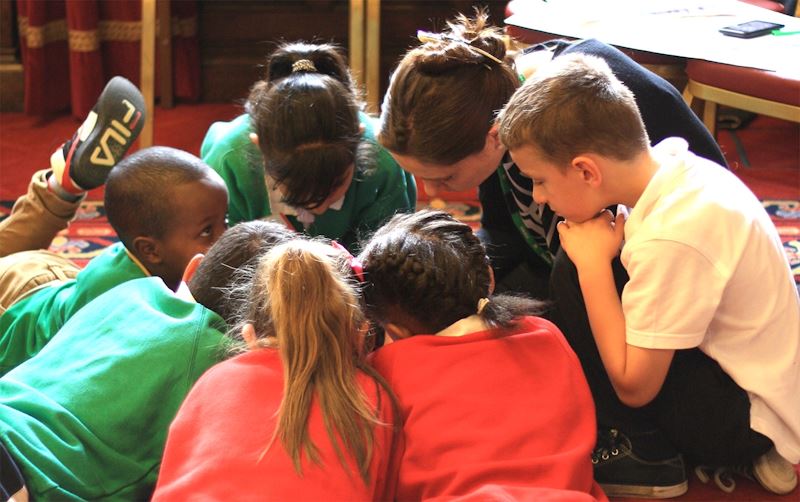
There is considerable evidence from organisations such as UNICEF UK and their Rights Respecting Schools Award programme, and the work of grassroots organisations such as the network of local Development Education Centres, of a demand for resources, professional advice and engagement with educational projects on global issues. The success of the UK Global Learning Programme between 2012 and 2018 showed the depth of interest by teachers and young people in global learning.
An aim of this programme was to encourage teachers and young people to move from a charity perception of development and global issues to one of social justice. It engaged over 10,000 teachers across the UK, empowering those who were interested in wanting to teach global issues but didn’t feel they could. The positive uptake highlights the considerable interest by teachers in engaging with global issues in the classroom, but also the need for resources and support to enable them to deal with often very complex topics.
Credit: The Global Learning Network
The challenge for the UK Government and the leading development agencies, then, is to reconsider their relationship to how people and groups of all ages engage with global issues. Social media has had a major influence in reducing engagement with global issues to simplistic messages and solutions. It is necessary to recognise that the interest and engagement in global issues still exists within many aspects of UK society, but this may well need to be framed in ways that are different to, say, twenty years ago when there was strong public support for Make Poverty History. This means adopting the approach of the UK Global Learning Programme, and moving towards a view of international development rooted in global social and environmental justice, rights and peace.
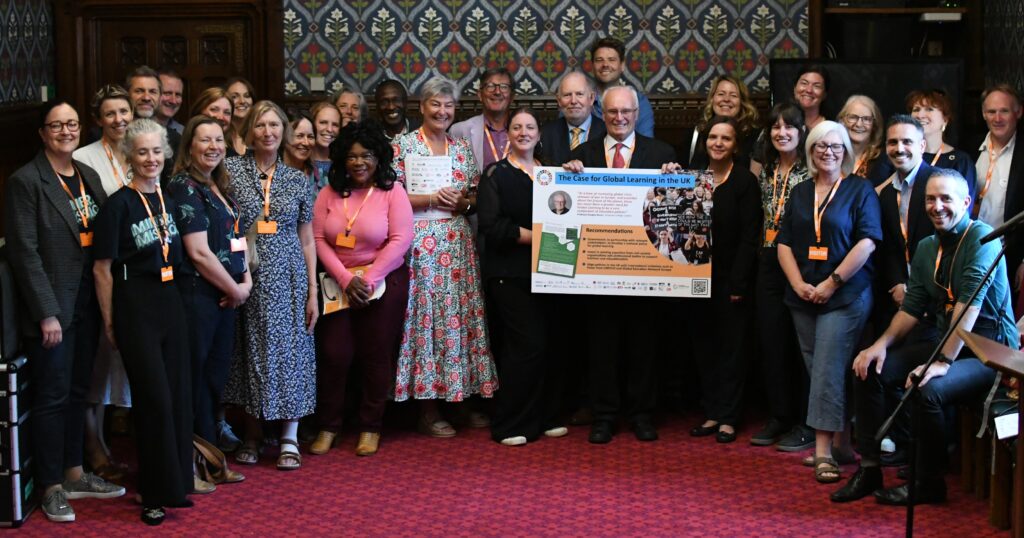
A coalition of organisations in the UK recently published The Case for Global Learning which called on the UK Government and other bodies to recognise the importance and value of learning about global issues.
Global Learning provides a framework to develop teachers’ and students’ knowledge, while also providing students with a set of tools so that they can take into forms of social engagement and personal responses. It promotes a global outlook and ensures that students have access to a range of voices and perspectives that can enable them to develop a more socially just world view.
The UK is a diverse society; its economy and communities are directly affected by global forces. Without providing resources and support to global learning, far right forces that peddle xenophobia and forms of a narrow English nationalism will gain increased support and influence. There is a need to change the narrative from addressing migration in terms of a siege mentality to one that talks about inclusivity, of social justice and human rights and how through supporting this value base, educational initiatives can be developed that enables learners of all ages to have a more informed basis on which to engage in debates that confront UK society today.
Credit: Cumbria Development Education Centre
The Development Education Research Centre, where I am based at University College London, runs a successful Masters’ programme in Global Learning, a range of online courses, and produces a wealth of research papers relevant to addressing today’s issues. Today’s global issues are complex and require more than just superficial engagement. There is a need for NGOs, professional and academic bodies, teachers and community groups to work together to promote a vision through education for global social justice.
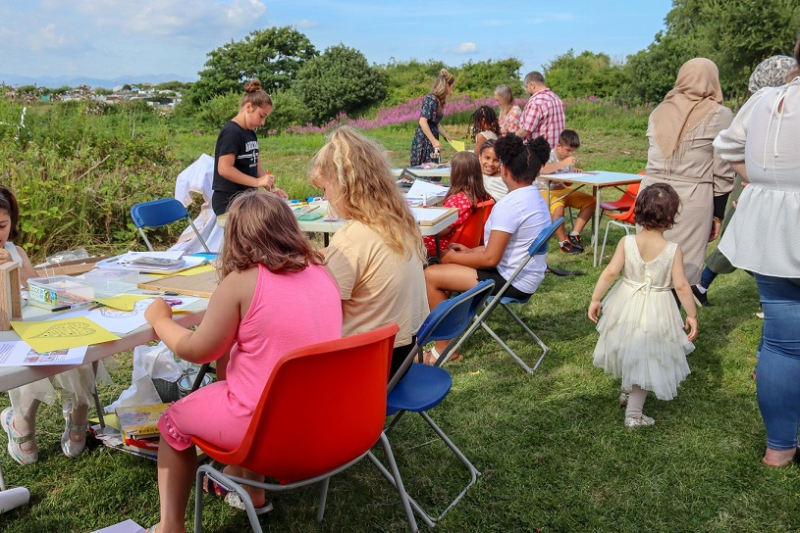
There are many examples of this in practice today including Global Learning London’s Communities of Hope project and in Cumbria where the local Development Education Centre has run a successful community project on Discovered Stories, Shared Communities. Both projects start by identifying and understanding dominant local concerns and considering how they might connect to global issues. They also work with communities in a process of learning that develops skills and values that are framed within global social justice perspectives.
Historically, the UK has a proud record of being one of the leaders in building understanding and support for development and global issues. There is a wealth of experience and interest within education and many community organisations. What is needed is national bodies, be they governments or NGOs, to recognise this, because together the rise of xenophobia and narrow nationalism can be tempered through global citizenship and calls for a more just and sustainable world.
After publishing, Douglas Bourn sat down with Will Sewell, Campaigns and Communications Officer at Results UK, to discuss in more detail the points raised in his blog. You can watch that conversation below.