
In an increasingly volatile world, health can no longer be viewed as an item of expenditure or a soft humanitarian extra. It is a core strategic investment in national security, economic resilience, and international influence. As the UK prepares to assume the G20 presidency in 2027, policymakers face tightening fiscal pressures that demand rigorous scrutiny of every public pound. Yet short-term budgetary cuts must not compromise our long-term defence against far more costly global crises.
Championing global health security, and specifically next-generation Tuberculosis (TB) vaccines, offers the UK a defining strategic opportunity: translating British scientific leadership into tangible protection, safeguarding global market stability, and projecting international influence where it matters most.
the G20
The Group of 20 (G20) brings together 19 countries, the European Union, and the African Union, representing 85% of global gross domestic product, over 75% of international trade, and 60% of the world’s population. This unmatched political and economic weight gives the forum a clear mandate to tackle systemic international threats.
Over the past decade, the G20 health agenda has shifted from reactive crisis management to a permanent policy pillar alongside finance, climate, trade, development and technology. Following COVID-19, health policy was directly linked to economic resilience through the Universal Health Coverage 2030 targets. Recent G20 presidencies have built steadily on this foundation: Brazil set a major benchmark in 2024 with its ministerial declaration on health system resilience, translating global discussions into multi-billion-dollar commitments to tackle health inequalities and preventable deaths. South Africa kept momentum in 2025 by positioning science and innovation as key engines for economic growth and the global fight against TB.
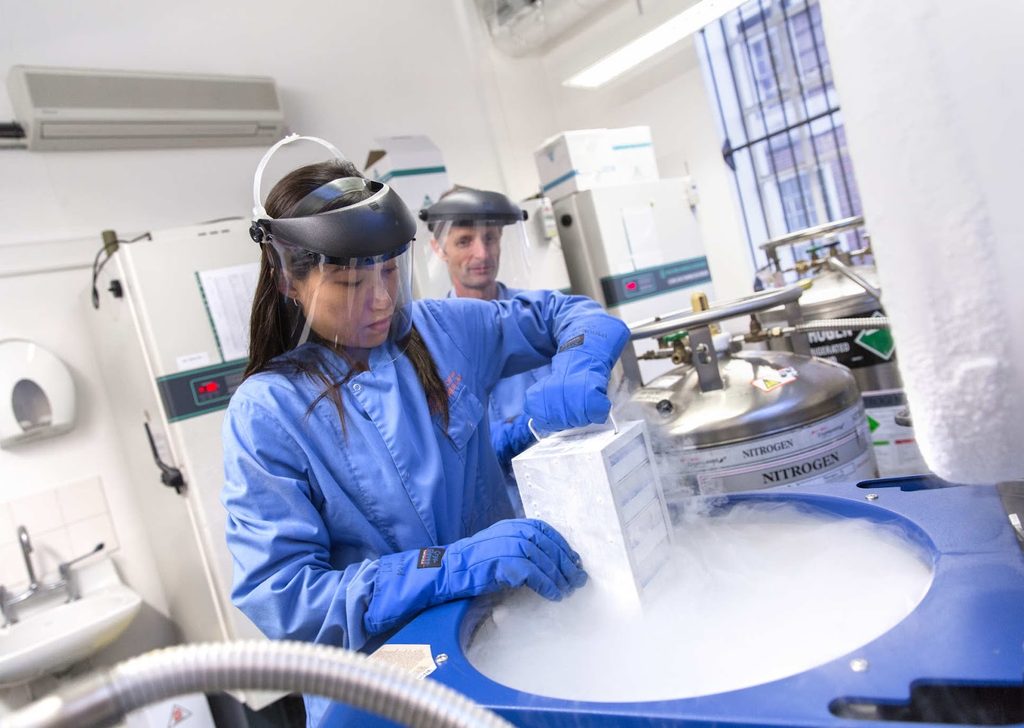
Researchers in the Department of Infectious Disease at Imperial College London. Credit: Thomas Angus/Imperial College London
the TB challenge
TB remains the world’s leading infectious disease killer, yet the only vaccine we have – Bacillus Calmette-Guérin (BCG), was developed over a century ago. While the BCG helps protect infants and children, it offers limited protection against pulmonary TB (TB in the lungs) in adolescents and adults, where the vast majority of TB transmission occurs.
Vaccines are among the most effective tools for protecting population-level health. By preventing and controlling over 30 infectious diseases, vaccines underpin global health security, cut unnecessary hospitalisations, and curb active outbreaks. Equitable access to vaccines stands as a vital benchmark for justice and sustainability across all nations.
In the world’s 94 lowest-income countries, every $1 invested in vaccination yields $16 in direct savings from averted healthcare costs, lost wages, and lost productivity. When you factor in broader economic gains, such as the value that people place on living healthier, longer lives and the long-term burden of disability, the net return increases to $44 per dollar invested.
However, there is reason for optimism. At present, 14 TB vaccine candidates are in the development pipeline, moving through clinical trials. If regulatory and licensing approvals go smoothly, we could see the first new TB vaccine in over 100 years by 2029-2030. This would be more than a scientific breakthrough; it would be a game-changer for global public health, capable of saving millions of lives, protecting economic productivity and advancing health equity.
“We’re throwing the kitchen sink at TB, doing absolutely everything we can – introducing new tools to screen and test, shorter regimens, expanding TB prevention treatment, involving the private sector and communities. But without a TB vaccine, we cannot stop people from dying of TB or end suffering due to TB, and we cannot turn off the tap entirely. We need the G20 to step up and increase investment in getting safe and effective TB vaccines into the market, and in creating enabling environments for vaccine introduction. There is no room for delay – we need this today”, said Dr. Ramya Ananthakrishnan, Director of REACH, a non-profit organisation which has been working on TB in India for over 28 years.
The UK has a long history of excellence in research and development. From becoming the first nation to approve and roll out the COVID-19 vaccine to the development of the RS21 Malaria vaccine, to launching the world’s first phase one clinical trial for a vaccine targeting the Bundibugyo Ebola virus, the UK remains at the forefront of science and innovation.
At a time when broader international consensus can be difficult to reach, health security provides a realistic platform for coalition building and international cooperation. By prioritising TB vaccines and health systems resilience during the UK G20 Presidency, the UK can:
- protect national security and trade: preventing dangerous outbreaks and drug-resistant infections at their source before they disrupt trade routes, strain health services and threaten global supply chains;
- deliver maximum value for taxpayers: by investing in prevention now, we cut the future cost of emergencies, mitigating long-term global health crises before they become financial burdens;
- project UK soft power: leading a coalition that brings together Global South and North economies around shared economic stability and health security goals.
Global health security is not an abstract policy debate, nor is it isolated to distant borders; it is a deeply personal issue that connects families in Mumbai directly to communities across Manchester. Drug-resistant superbugs and infectious diseases do not respect borders. When we leave global health systems underfunded abroad, we leave our own families vulnerable, put direct strain on an already stretched National Health Service, and threaten the stability of British supply chains.
As the UK prepares for the G20 presidency in 2027, we have the chance to step up with the vision and courage British scientific innovation has always represented. Investing in next-generation TB vaccines is one of the most vital national defence moves we can make. By choosing to lead globally, we protect our health service, secure our domestic economy, and prove that Britain remains a principled leader in a turbulent world.