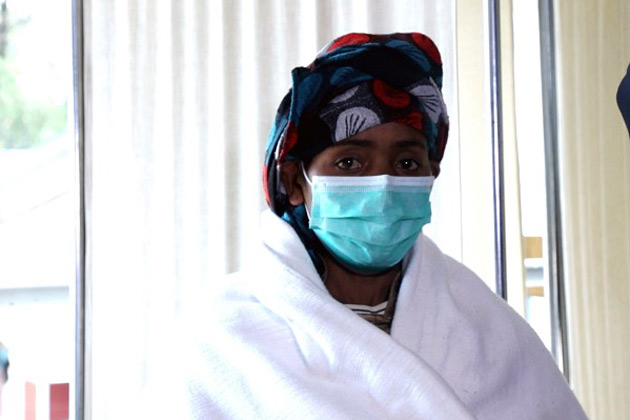
Source: Michael Nwangi, 2023
stigma kills
Tuberculosis (TB) is a deadly infectious disease that thrives because of poverty, undernutrition, stigma and poor healthcare systems. None of these factors can be treated with drugs, but require social interventions. The UK Government must follow through on commitments it made at a United Nations ‘High-Level Meeting’ (HLM) on TB in 2023 to help ensure that no one with TB has to endure financial hardship because of their illness.
what
TB is a deadly infectious disease with a variety of risk factors, social as well as medical
who
The UK Government must help ensure a holistic approach to TB that includes social protection
how
Ask your MP to urge the Government to meet the commitments it made at the UN in 2023 to protect TB patients from financial hardship
what’s happening?
Tuberculosis (TB) is a deadly infectious disease that still affects over 10 million people worldwide every year. The causes of TB include poverty, undernutrition, stigma and inadequate healthcare infrastructure. The increase in migration, overcrowded conditions and climate change are all risk factors that increase the spread of infectious diseases, and limit individuals’ access to effective diagnostic tests and treatments.
On World TB Day this year (24 March), Results published a report, Stigma kills: Why medicine alone won’t end tuberculosis. This calls for policies and interventions that target the root causes of TB, such as poverty, undernutrition and stigma, and that ensure an equitable approach to providing TB services to those most in need. This type of approach requires that health services and agencies beyond the health sector work together to tackle the root causes of TB to make sure that no one is left behind – a ‘whole of society’ approach.
how you can make a difference
Help us persuade the UK Government to meet the commitments it made at the UN High-Level Meeting on TB in September 2023. You can do this by:
- Writing to your local MP, using the information on this page. Ask them to send a letter to the Minister for Development, Andrew Mitchell MP, to ask what the Government is doing to ensure that “100% of people with tuberculosis have access to a health and social benefits package”. You can find your MP’s contact details here.
- You could also ask your MP to raise a Question at an upcoming Foreign, Commonwealth and Development Office (FCDO) Questions session in the House of Commons or as a ‘Written Question’.
take action!
Write to your MP to tell them about the UK’s commitments on TB made at the UN in 2023
Ask your MP to ask a Parliamentary Question about the Government’s actions to eliminate TB
we’re here to support you!
If you have any questions or need support or advice in writing your letter, please reach out – it’s our pleasure to help you establish that relationship with your MP!
Contact Naveed Chaudhri, Head of Campaigns at [email protected] if you need any advice!
Thandiwe’s story
“My name is Thandiwe. I am Ethiopian and I have a form of tuberculosis (TB) which is resistant to many different drugs – known as multidrug resistant TB, or MDR-TB. It all started over six months ago. I was coughing a lot but I thought it was a simple case of flu. I was sent to a clinic where my sputum was tested and shortly after doctors confirmed that I had TB. I was then referred to the local health centre where I was prescribed treatment. I believe that I contracted TB while working as a ticket attendant on buses. After two months I developed side effects from the medication. I was then sent to another clinic, where I was diagnosed with MDR-TB and placed on a different treatment. Since then I have learnt a lot about TB, and have begun to recover. I now know that TB is curable and preventable and I am hopeful for the future. I also feel very lucky because as a civil servant I am covered by social protection and still receive my monthly salary even though I had to stop working six months ago. My salary will be covered for up to eight months. I am hoping to return to work again soon.”
Read about Thandiwe and other TB survivors’ personal stories on the World Health Organization website.